

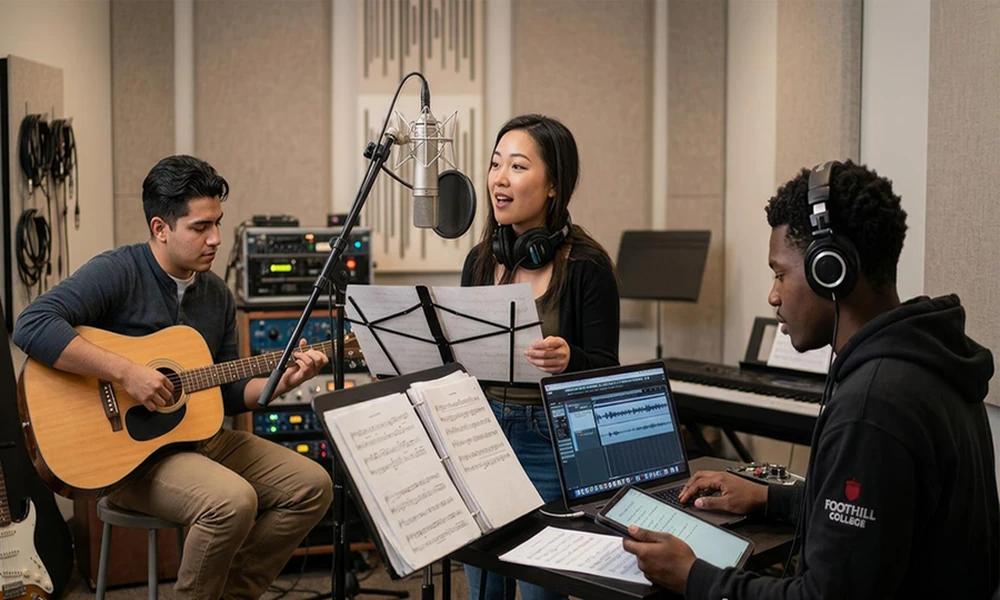
Choosing the right music education path involves more than finding a school that teaches your favorite instrument. Whether you dream of performing professionally, producing original tracks, composing for visual media, or working behind the scenes, your educational choices can influence how you develop your skills and prepare for future opportunities.
With so many courses, certificates, and degree programs available, identifying the right direction can feel challenging. The key is to understand your interests, evaluate your current abilities, and determine which learning environment supports your long-term goals.
Here are the most important factors to consider before committing to a music education program.
Identify Your Musical Interests and Career Direction
Before exploring educational options, consider what you want to achieve through music.
Some students enjoy performing onstage, while others prefer the creative and technical processes involved in recording, songwriting, or production. These interests may overlap, but each direction can require a different combination of skills.
For example, aspiring performers may benefit from studying instrumental techniques, music theory, improvisation, and ensemble performance. Students interested in audio production might prioritize recording techniques, digital audio workstations, mixing, and studio workflows.
Those pursuing music business careers may want to understand artist management, publishing, licensing, marketing, and contracts.
You do not need a perfectly defined career plan before beginning your studies. However, identifying a few potential directions will help you evaluate programs more effectively.
Consider these questions:
- Which musical activities do you enjoy most?
- Do you prefer performing, creating, producing, or managing projects?
- What technical or creative skills do you currently lack?
- What kind of work would you like to explore after completing your education?
Your answers can help narrow your choices.
Compare Programs by Curriculum, Not Just Their Names
Two music programs with similar titles can provide very different learning experiences.
Rather than focusing exclusively on the name of a qualification, examine the subjects taught, practical training opportunities, and flexibility of the curriculum.
A strong curriculum should support the particular skills you want to develop. For performance-oriented students, that might mean combining instrumental instruction with ear training, music theory, and live performance experience.
Production-focused students may benefit from programs that include recording, sound design, music technology, and collaborative projects.
Students researching a California music program can examine the range of performance, production, recording, songwriting, and music business pathways available to understand how different educational options align with their interests.
When comparing curricula, look closely at required courses and electives. Consider whether the program allows you to explore related disciplines without losing focus on your primary goal.
For example, a guitarist interested in becoming an independent recording artist might benefit from additional knowledge of songwriting, audio production, and music marketing.
The most appropriate curriculum is not necessarily the one offering the greatest number of subjects. It is the one that provides the right balance of specialization and supporting skills.
Consider the Value of Practical Experience
Music education is most useful when students have opportunities to apply what they learn.
Understanding musical concepts is important, but practical activities help turn theoretical knowledge into usable skills.
Depending on your area of interest, valuable learning experiences might include live performances, recording sessions, collaborative songwriting projects, production assignments, or simulated industry scenarios.
For performers, regular practice and constructive feedback can support technical improvement and musical confidence. Producers may develop their abilities by recording different instruments, experimenting with arrangements, and refining mixes.
Collaboration also deserves attention.
Working with other musicians exposes students to different creative approaches, communication styles, and problem-solving techniques.
Before enrolling, investigate how a program incorporates practical work into its curriculum. Find out whether students complete projects, participate in performances, receive individual feedback, or develop portfolios.
These opportunities can make educational experiences more relevant to professional ambitions.
Evaluate the Learning Format and Time Commitment
The right educational path should fit your circumstances as well as your ambitions.
Some students prefer structured, full-time campus learning, while others need flexibility because of work, family responsibilities, or existing musical commitments.
On-campus programs may provide regular opportunities for face-to-face collaboration, access to facilities, and interaction with instructors and classmates.
Online education can offer greater geographical flexibility, particularly for students who cannot relocate or attend classes in person.
However, online learning requires organization, self-discipline, and a suitable environment for practice or technical coursework.
The length of a program matters too.
Short courses and certificates may appeal to learners seeking focused training in a particular skill. Longer degree programs can offer broader academic study and more extensive opportunities to explore related disciplines.
Neither route is automatically better.
Think about your available time, preferred learning style, financial situation, and the depth of education you want to pursue.
Look Beyond Graduation When Making Your Decision
A music education program should help you develop abilities that remain useful beyond the classroom.
Alongside creative and technical knowledge, consider the importance of communication, adaptability, professional relationships, and independent project management.
Musicians often benefit from understanding how to organize rehearsals, collaborate effectively, manage creative deadlines, and present their work professionally.
For students interested in independent careers, basic knowledge of promotion, budgeting, and intellectual property can also be valuable.
When researching educational options, look for opportunities to build a portfolio, receive constructive feedback, and work with people from different musical backgrounds.
It is equally important to approach career claims realistically. Completing a particular program does not guarantee employment, industry connections, or commercial success.
Instead, evaluate whether the education provides meaningful opportunities to develop your abilities and take responsibility for your professional growth.
Conclusion
Choosing a music education path requires a clear understanding of your interests, goals, and learning preferences.
Start by identifying the skills you want to develop, then compare curricula, practical learning opportunities, program formats, and time commitments.
Remember that the most suitable option is not necessarily the longest or most comprehensive program. It is the one that matches your current needs while allowing room for artistic and professional development.
By researching your options carefully and asking thoughtful questions, you can make an educational decision that supports both your musical interests and your future ambitions.
